 Greenhouse gas (GHG) emissions continue to rise, causing the earth’s surface to warm 1.1°C beyond preindustrial levels. This is tracked by NASA satellites, which show the earth’s surface getting warmer as heat-trapping GHGs cause the stratosphere to cool. This has not happened for millions of years and is causing catastrophic consequences in the form of many harsher and more frequent climate change disasters. Net-zero means “cutting greenhouse gas emissions to as close to zero as possible, with any remaining emissions re-absorbed from the atmosphere.” https://www.un.org/en/climatechange/net-zero-coalition.
According to the UN, based on government pledges, we are on track to reach 2.8°C by the end of the century, far above the target of 1.5°C or even the 2.0°C limit set out in the Paris Agreement in 2015. Based on national action plans, we will increase global GHG by over 10% by 2030, compared to 2010 levels. This means we need to reduce GHG emissions by 45% in the next seven years to limit warming to no more than 1.5°C and reach net-zero by 2050. https://www.unep.org/resources/emissions-gap-report-2022.
If you’re asking yourself, “How big will this trend get?” Consider that in 1954, we had a world population of 2.7 billion, with 310 parts per million (ppm) of carbon in the atmosphere, and 64 percent of wilderness remained. As of 2020, the world population was 7.8 billion, with 415 ppm of carbon in the atmosphere and 35 percent of wilderness remained. For over 800,000 years, CO2 levels fluctuated between 170 ppm and 280 ppm, not 417.2 ppm, which was last year’s average and growing. The last time humans experienced global warming like this, where the ppm of CO2 went above 300 ppm, was . . . well, never. Humans have never lived in conditions even remotely close to what we are experiencing now, which is not sustainable for future generations’ survivability. (A Life on Our Planet: My Witness Statement and a Vision for the Future, by Sir David Attenborough, Joannie Hughes, 2020)
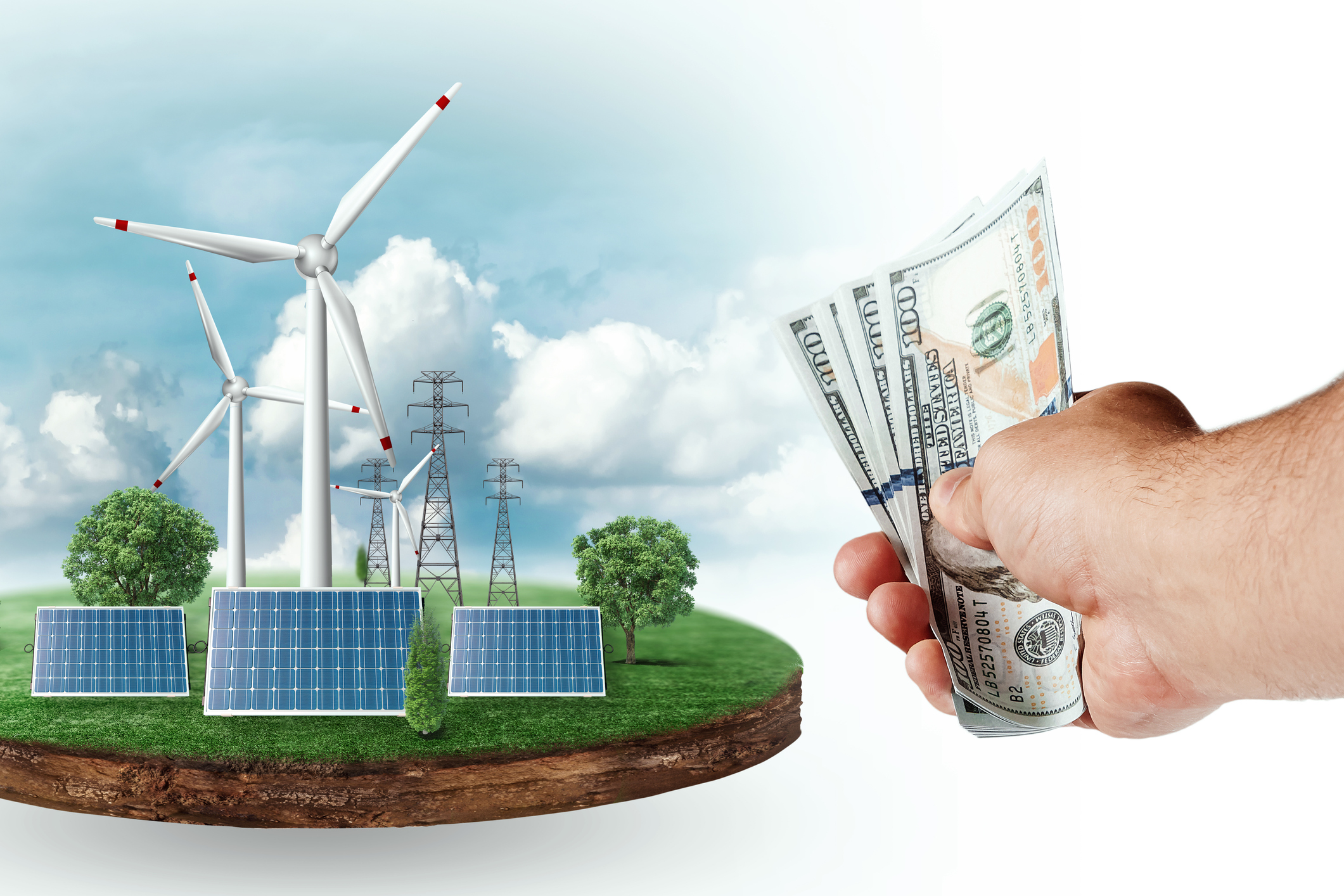
This is causing what is known as the “green transition,” a move away from fossil fuels to renewable energy and living and using more sustainable products and services that eliminate waste. It is beginning to galvanize people, companies, investors, countries, and policymakers. And there is no company that can avoid having to transition to net-zero as this will be fundamental to the future.
To give you an idea of the momentum, in 2016, only 13 companies had net-zero pledges. Today, over 4,200 companies have Science Based Target Net-Zero commitments. This trend will only intensify the longer we use fossil fuels, increase GHG emissions, and experience the consequences. https://sciencebasedtargets.org/reports/sbti-progress-report-2021.
Last year, investors poured a record $649 billion into ESG-related funds as of November 30, 2022, compared to $285 billion in 2019, which accounts for 10% of worldwide investments in 2021. https://www.reuters.com/markets/us/how-2021-became-year-esg-investing-2021-12-23/.
Environmental, social, and governance (ESG) standards are here to stay, and investors and regulators are demanding transparency on carbon emissions, social impacts, and governance. CIMdata has a Sustainability and Green Energy practice to help companies reduce their product carbon footprint (PCF), design sustainability into their products and services, and embed sustainability within their PLM strategy.
It has been said that 80% of the environmental impact is locked into the product in early design. Most GHGs are embodied in the materials companies use to make their products. Therefore, the fastest way to reduce the PCF is to have visibiity to the carbon equivalents (CO2e) for each part or material during design as well as maintain it throughout the product’s lifecycle. And since most CO2e comes from your supply chain (known as scope three emissions), you need visibility into your supply chain as you design.
The next thing to consider is—are you designing for sustainability? Is your product used in a cradle-to-cradle circular model where you have accounted for all emissions? Or is it cradle-to-gate or cradle-to-site? Some major products have committed to reaching net-zero emissions and becoming 100% recyclable. To do this, you must reconsider how you design with the end of life in mind. How do these materials get repaired, repurposed, and recycled, and how do they become nutrients that return to the earth? If this sounds far fetched, it is not—it is beginning to happen, becoming a competitive differentiator. Also, if you think this will not be mandated, then as just one example, you may wish to consider brushing up on the EU rules for the design, production, and waste treatment of batteries: https://www.europarl.europa.eu/news/en/press-room/20221205IPR60614/batteries-deal-on-new-eu-rules-for-design-production-and-waste-treatment.
Many green innovators are experiencing tremendous growth and shareholder value, so when you think of this as an extra cost, there is a strong argument to be made that long-term sustainability is far more profitable. Going green is not just beneficial to people, the planet, and your brand image, such as with Patagonia. Companies with state-of-the-art PLM strategies that have high visibility of their CO2e, cost, quality, and many aspects of their product throughout its lifecycle will be able to accelerate their drive to net-zero. The reason for this is that they have collective visibility to their PCF. Additionally, they are in a much better position to reduce their costs, increase their innovation, and time-to-market while building a more resilient supply chain.
Recently, I presented a CIMdata Educational Webinar titled The Green Energy Transition and Sustainability, which you can find here: https://register.gotowebinar.com/register/8685773949299271951
I would like to hear from you. Please take a few minutes to take part in our 2023 Green Energy and Sustainability Survey. Receive a copy of the findings and enter a drawing for a gift card or donation to Engineers without Borders. Take the survey at https://lnkd.in/eT-SEmFD #sustainability #greenenergy
Thank you again, and please reach out to me with any questions.
Mark
PS: Check out the new Green Energy consulting practice page!