PDF
Keysight emerges as a trusted Design Engineering Software provider
Key Takeaways
- Keysight Technologies has been a global leader in Electronic Design Automation (EDA), electronic test, measurement, and engineering software for a decade, helping companies design and validate complex systems with confidence. Keysight’s acquisition-led expansion over the past five years has broadened the scope of its Design Engineering Software group to provide application-specific multi-physics engineering workflow solutions to design, simulate, validate, and optimize high-performance use cases for today’s complex machines and devices. Utilizing a collaborative and open data ecosystem spanning EDA, structural analysis, computational fluid dynamics, multibody dynamics, optical and photonic analysis, software quality engineering, as well as engineering data and IP management, Keysight has created a differentiated portfolio of software tools to address industry needs.
- This strategic shift reflects broader industry pressures, including increasing product complexity, higher integration levels, electrification, tighter development timelines, and the growing need to shift engineering validation earlier through trusted digital workflows and virtual prototyping.
- A key business value proof point for industrial customers is Keysight’s internal use of its Design Engineering Software portfolio, applying these tools to its own hardware development to reduce prototype iterations, improve cross-disciplinary collaboration, and increase engineering productivity. Looking ahead, as Keysight continues its transition toward a software-driven business model, priorities such as supporting heterogeneous customer toolchains remain important focus areas.
Engineering Complexity and the Need for AI-Enabled Product Development
Industrial organizations are accelerating their transition toward AI-enabled digital engineering workflows as system complexity, electrification, and compressed development cycles are reshaping product development. Modern products increasingly combine electronics, software, mechanics, optics, and manufacturing constraints into tightly-coupled multi-physics systems, raising the cost and risk of late-stage design changes.[1]
In electronics, chiplet-based architectures illustrate both opportunity and complexity. While enabling higher performance and heterogeneous integration, chiplets introduce tightly interdependent signal integrity, thermal, mechanical, and manufacturability considerations. Similar dynamics exist in aerospace and defense subsystems, where physical prototypes are expensive and late-stage rework is disruptive. In both cases, organizations are under pressure to validate earlier and reduce reliance on iterative hardware builds.
In response, many engineering software companies have expanded their software portfolios to support concurrent engineering, multi-physics performance simulation, and digital thread continuity. Successful industry strategies involved shifting physical prototyping effort to simulation-focused engineering earlier in the development cycle. Keysight Technologies is a leading provider in supporting these strategies with a broad portfolio as shown in Figure 1.
Keysight has also incorporated machine learning capabilities into its products for well over a decade and is continuing to evolve its AI approach toward agent-based workflow orchestration and customer-compound intelligence, further strengthening the ability to automate and scale complex engineering workflows.
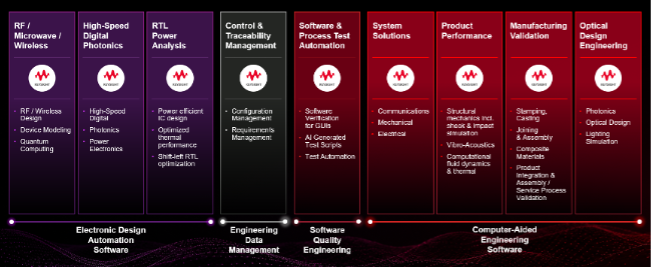
Figure 1 Keysight’s Design Engineering Software Portfolio for Developing Application-Specific Multiphysics Workflows
Keysight’s Strategic Shift: From EDA Roots to a Hierarchical System-Level Software Portfolio
Software used for electronic hardware design and development were created as early as the 1980s within Hewlett-Packard to support RF and microwave measurement hardware, eventually forming a dedicated Electronic Design Automation (EDA) business. Under Agilent Technologies and later Keysight, the EDA portfolio expanded into high-speed digital analysis, signal integrity, and system simulation, closely aligned with test and measurement workflows.
Following its separation as an independent company in 2014, Keysight increasingly positioned software as a strategic complement to hardware test and measurement. However, rising system complexity, tighter development cycles, and demand for earlier cross-domain validation exposed the limits of an electronics-only solution approach. While EDA technology remains foundational, emerging high-performance applications increasingly require complementary multiphysics simulation, validation, and workflow orchestration to ensure real‑world robustness beyond electronic design and verification alone. Addressing these gaps has driven a focused, acquisition-led expansion over the past five years.
Strategic software business additions include Eggplant (2020) for software test automation and functional validation, Cliosoft (2021) for IP and design data management, ESI Group (2024) for multiphysics computer-aided engineering (CAE) simulation, Synopsys Optical Solutions Group (2025) for optical and photonic simulation; and Ansys PowerArtist (2025) for RTL-level power and energy analysis. Together, these capabilities extend Keysight’s software coverage across the electrical, thermal, mechanical, optical, manufacturing, and software validation domains.
CIMdata views this evolution as positioning Keysight closer to hybrid hardware-software providers such as Siemens Digital Industries Software, rather than pure-play engineering software vendors such as Synopsys and Cadence. Keysight’s differentiation lies in combining domain-specific product performance simulation with deep test and measurement expertise, enabling a closed-loop feedback between digital simulation and analysis, empirical measurement, and emerging AI agents that strengthens confidence in virtual prototyping results across the various engineering disciplines.
Importantly, Keysight’s strategy remains anchored in high-value and complex cross domain workflows that rely on robust multi-physics virtual prototyping. By extending outward from electronics, EDA, and test domains into design related mechanical physics simulation domains, the Design Engineering Software portfolio reflects a pragmatic response to customer demand for interoperable product engineering solutions that support shift-left validation and reduced reliance on late-stage physical prototypes.
Integrated Digital Engineering Value Proposition: Data-Driven and Application-Focused Cross Domain Multiphysics Workflows
Technically, Keysight’s Design Engineering Software enables system, sub-system, and component-level evaluation across electrical, thermal, mechanical, optical, and manufacturing domains. This is particularly relevant for electronics-driven products, where performance and reliability depend on tightly coupled physical effects such as signal integrity, power consumption, thermal dissipation, and mechanical stress. By supporting earlier analysis and trade-off decisions, Keysight’s Design Engineering Software aligns with industry efforts to shift validation activities to earlier in the development lifecycle.
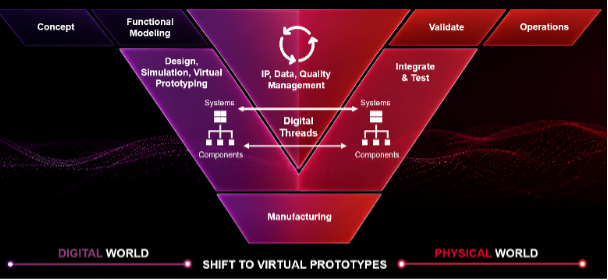
Figure 2 Keysight’s Shift-Left Approach, Enables Early Prediction of Manufacturability & Performance in Real-World Operations
From a process standpoint, as illustrated in Figure 2, Keysight emphasizes concurrent engineering and virtual prototyping. Shared models, traceable data, and integrated validation workflows allow multiple engineering disciplines to work in parallel, reducing late-stage design changes and reliance on physical prototypes.
Electronics Data Management ensures data flows correctly across workflows, providing the trusted, structured data foundation required for AI (ensuring engineering data is consistent, traceable, usable, and is accurate to support analytics and automation). Software Quality Engineering ensures those workflows continue to work correctly and reliably over time, applying AI‑enabled test automation and validation to continuously verify complex, multi‑tool workflows (to detect breakages, regressions, and logic failures faster than manual testing). Together, they turn advanced multiphysics design and simulation into deployable, enterprise‑ready, and future-proof engineering workflows, designed to operate within open, multi-vendor ecosystems, integrating with existing PLM, MES, ERP, and third-party engineering tools.
A distinguishing element of Keysight’s approach is the integration of product performance simulation and analysis with physical measurement. Test and measurement expertise is used to validate models and improve correlation between virtual predictions and real-world behavior, strengthening confidence in simulation-driven design decisions; particularly in high-reliability and regulated environments.
CIMdata views this combination of multiphysics simulation and analysis, workflow integration, measurement-informed validation, and ecosystem openness as well aligned with the emerging direction of digital engineering initiatives in industry.
Application-Specific Engineering Workflows for Electronics Applications at Keysight Technologies
Keysight’s Design Engineering Software portfolio demonstrates its value most clearly when applied to real-world, application-specific engineering workflows. Rather than treating simulation, design, and validation as isolated activities, Keysight organizes its software capabilities around how engineering work is performed. This is particularly critical in modern electronics-driven products, where system behavior is no longer determined within a single domain. Electrical performance interacts with thermal conditions, mechanical constraints influence signal integrity, and manufacturing decisions directly impact reliability and lifecycle outcomes.
A compelling example is how Keysight uses its own software portfolio to design and validate its test and measurement instruments. As shown in Figure 3:
- At the system level, engineering focuses on the physical realization of the instrument: its enclosure, cooling architecture, and structural robustness. Here, multiphysics CAE workflows simulate thermal loads, mechanical stress, vibration, and environmental conditions to ensure the product can be manufactured, transported, and operated reliably. Manufacturing-aware simulations such as stamping, forming, and virtual assembly further validate producibility and reduce downstream risks before physical prototypes are built.
- At the subsystem level, the focus shifts to microwave and RF performance, where signal generation, routing, and measurement functions are implemented. Performance at this level depends on tight coupling between electrical, thermal, and mechanical domains. Keysight integrates EDA and CAE tools to evaluate these subsystems ensuring RF blocks operate as a unified system rather than isolated components. This includes system-level RF simulation, electro-thermal analysis, and reliability validation, which together improve accuracy, stability, and repeatability early in the design cycle. The approach extends further into advanced packaging (chiplets, SiP) and emerging domains like photonics, highlighting Keysight’s ability to span electronics, mechanics, and optics within a single workflow.
- Finally, at the component and chip level, engineering focuses on power integrity, high-speed digital behavior, and device-level reliability. Using EDA-driven workflows, Keysight designs and validates power delivery networks and ensures signal integrity under real-world operating conditions. These analyses are tightly linked with mechanical and thermal simulations to account for manufacturing stresses and long-term reliability. By connecting these layers (from system to subsystem to component) Keysight enables continuous validation across the entire product hierarchy, ensuring that designs are not only functionally correct but also robust, manufacturable, and reliable in operation.
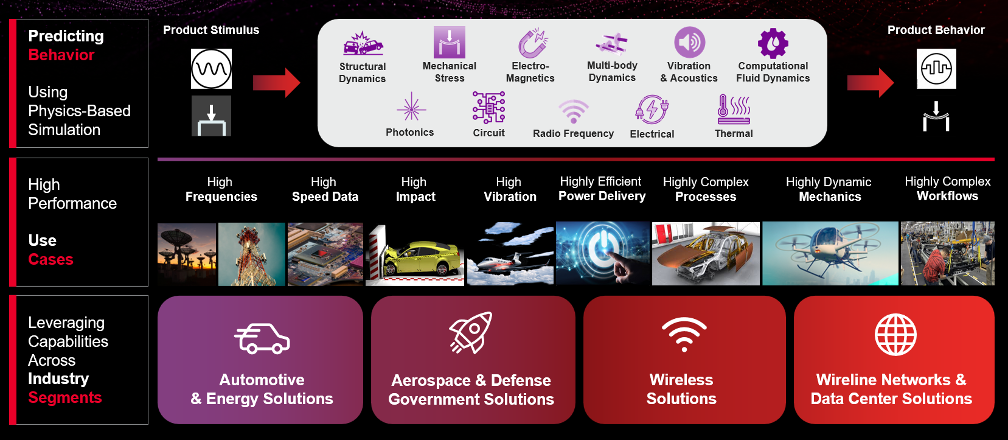
Figure 3 Keysight's Approach to Solving Deep Multiphysics Interactions across High-Performance Applications
This highlights a broader strategic shift. Keysight is not just providing individual tools, but orchestrating connected, integrated engineering workflows across domains, ensuring integrity and governance. By connecting design, simulation, validation, and optimization across hierarchical levels and physics domains, Keysight’s Design Engineering Software enables a shift-left approach reducing reliance on costly physical testing while improving predictability and time-to-market. This workflow-centric model represents a key differentiator in enabling high-performance, electronics-driven systems.
Summary: Keysight DES Strengthening Its Role in Digital Engineering
Keysight’s evolution from a test hardware and measurement–centric company toward a broader Design Engineering Software provider reflects a tectonic shift in how complex, electronics-driven products are now developed. Growing system complexity, tighter development cycles, and increasing coupling between electrical, mechanical, thermal, optical, and software domains are driving demand for model-centric, data-centric, and AI-augmented engineering workflows. Keysight Technologies is focused on increasingly differentiating its software solutions by the ability to intelligently connect engineering disciplines across EDA with multi-physics performance simulation including optical analysis and software quality engineering, with deep test and measurement expertise enabled by IP, data management, and AI. This combination supports concurrent engineering based on rapid virtual prototyping, improving decision-making confidence and resulting in faster time to market. These capabilities are particularly relevant in semiconductors, automotive, aerospace, and photonics-driven applications.
Looking forward, CIMdata believes Keysight is well positioned to build momentum as it continues to align portfolio integration, workflow coherence, and software-oriented go-to-market execution. While the company needs to prioritize on unifying user experiences across acquired technologies and supporting heterogeneous customer toolchains, the company’s focus on high-value, application-specific workflows provides a pragmatic path to customer value and market differentiation. By sustaining its commitment to openness, lifecycle integration, and measurement-informed validation, Keysight is even better positioned to strengthen its role as a trusted digital engineering software partner for organizations developing increasingly complex electronic and electro-mechanical systems. The position is further reinforced by Keysight’s standing as a solution provider that has a closed loop of internal use, real-world data capture, and continuous model improvement.