How MathWorks Connects AI to Engineering Context, Simulation, and Evidence
Takeaways
- Adoption of AI in engineering is real but early, and the obstacles are practical: data, integration, and trust. According to CIMdata’s 2026 AI in PLM study, fewer than one in five industrial organizations use agentic AI, data quality is their top adoption challenge (60%), only 5% are very confident validating AI outputs, and integration with existing systems is their most important selection criterion (62%).
- Executives are funding engineering AI to deliver concrete business outcomes: faster development cycles, less repetitive work, and better design quality. Those benefits become credible only when AI output can be evaluated through simulation, testing, and requirements traceability.
- The market is expanding from generative AI assistants to agentic workflows. Software providers are investing ahead of customer demand. Based on current trajectories, CIMdata expects engineering value to come less from how autonomously an agent acts than from the surrounding context, governance, and validation.
- Model-Based Design is what makes AI-assisted engineering verifiable: because the system is defined in executable models, a change proposed by an assistant or an agent can be simulated, tested, and traced to the requirements it affects. MathWorks connects AI to that context three ways: AI-assisted Copilots, Agentic Toolkits with tools and knowledge for customer-chosen agents to drive MATLAB and Simulink, and direct calls to language models from MATLAB code.
AI Is Moving into Engineering Workflows
Generative AI has become part of daily life for most engineers but organizational deployment tells a different story.[1] In CIMdata’s 2026 AI in PLM study,[2] nearly nine in ten industrial organizations apply AI in a quarter or fewer of their product development projects (Figure 1), and a majority are still in the awareness or pilot stage. The gap between personal fluency and organizational deployment is the defining tension of this phase of adoption.
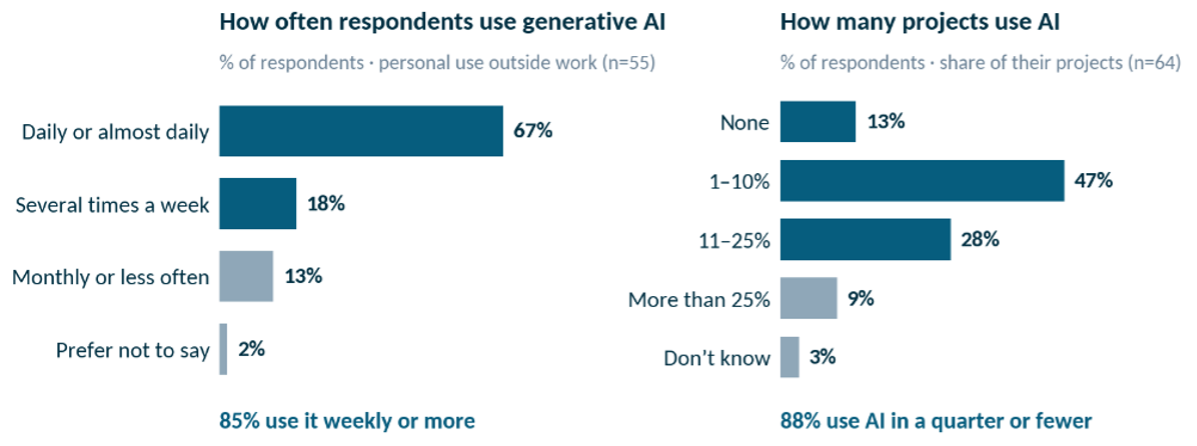
Figure 1—Personal AI Fluency has Outrun Organizational Deployment
(Source: CIMdata 2026 AI in PLM study)
The pressure to close that gap is real. Executive leadership at most large industrial organizations has issued top-down AI mandates, and roughly 80% of respondents in the CIMdata study expect AI investment to grow over the next two years, with virtually none pulling back. Meanwhile, the products these organizations develop keep growing more complex, with more software content, more electronics, and more interdependencies than their development processes were designed to handle.
The question executives are asking has therefore shifted from whether to use AI to where AI belongs in engineering work. General-purpose assistants have proven their value for writing, summarizing, and answering questions. The larger opportunity, and the harder integration problem, lies inside the engineering workflows used to develop complex systems. That is where MathWorks, the provider of MATLAB and Simulink, is concentrating its AI strategy.
Why Engineering AI Is Different
A general-purpose AI assistant is judged on whether its output is useful and plausible. Engineering output is judged against a higher standard: a control algorithm, a system model, or a piece of embedded code must satisfy requirements, respect the physics of the system it governs, and behave correctly across operating conditions, including the ones nobody thought to ask about. In aerospace, automotive, medical devices, wireless communications, and industrial equipment, being wrong is measured in safety and liability, not inconvenience.
So, engineering organizations cannot accept AI-assisted output on plausibility alone. They need evidence: simulation results, test outcomes, requirements traceability, and review. Engineering never extended blind trust to humans either: a design is accepted because it passes through reviews, analyses, and tests, and the engineer remains responsible for every result that ships. Only 5% of industrial respondents in the CIMdata study are very confident they can validate AI outputs. The problem is not choosing between speed and assurance; it is getting both, which is what makes the workflow question the one that matters.
From Generative AI Assistants to Agentic Workflows
The two terms are worth separating, because the requirements they create are different. A generative AI assistant answers questions. The pattern is always the same: the engineer asks, the assistant responds, and the engineer decides what to do with the answer. The unit of work is a single exchange, so nothing moves forward until a person has read the result and acted on it.
Agentic AI systems are given a goal rather than a question. An agent can plan a sequence of actions, use engineering tools to carry them out, evaluate intermediate results, and iterate toward a goal, under human supervision but not under human control at every step. The productivity potential is larger, and so are the stakes: small errors compound across steps, and the engineer must evaluate a whole trajectory of work rather than a single response. As generation outpaces comprehension, human understanding becomes the limiting factor on how much AI-assisted work an organization can absorb. The need for context, governance, validation, and evidence rises accordingly.
The market has run ahead of its customers here. Agentic AI workflows are the top development priority among software and service providers according to the CIMdata study, yet fewer than one in five industrial organizations currently use agentic capabilities. Based on current trajectories, the expansion from assistants to agents will continue, but CIMdata expects the value to accrue to agents that operate inside engineering workflows with the right context, governance, and validation mechanisms, not to those that automate the most steps or require the least supervision.
Agentic AI is also reshaping commercial models. When an agent rather than a person operates a tool, the user population widens and named-user licensing comes under pressure. Organizations evaluating engineering AI should ask deployment and licensing questions as early as they ask capability questions.
Model-Based Design as the Evidence Layer
Model-Based Design gives AI-assisted engineering something most environments lack: an executable definition of the system. Requirements connect to architecture and design models, those models simulate, code is generated from them, and tests trace back to the requirements they cover. The design lives in artifacts a computer can execute and check, not in documents describing intent.
Because these are executable artifacts, the impact of a change—whether made by an engineer, an AI assistant, or an AI agent—can be evaluated by simulating behavior, running tests, and tracing the change to the requirements it affects. Simulation gives a deterministic, reproducible answer before anyone commits to the change. In regulated industries, the same evidence feeds the qualification and certification packages that auditors and certification authorities expect.
In CIMdata’s view, this is where AI-assisted engineering gets the evidence it has lacked. AI can help propose, explain, modify, and orchestrate, but the engineer still must know what a change does to the rest of the system. Model-Based Design lets an engineering organization evaluate AI output with the same rigor it applies to human work, which is the bar the market is telling software providers it needs to meet. Organizations already working this way have most of the validation problem solved, because their workflow already produces that evidence.
MathWorks’ AI Strategy: Connecting AI to Engineering Context
MathWorks has worked on AI far longer than the current generative wave: its neural network and statistics toolboxes date to the 1990s. Its generative AI strategy is more recent and notably pragmatic. MathWorks does not build its own foundation large language models. It pairs externally hosted large language models with grounded responses using its own current documentation and code examples, and it has trained targeted models of its own where the external models fall short.
MathWorks offers three ways to bring AI into engineering work, usable in any combination, plus a deployment approach that spans all three:
- Copilots inside the tools. MATLAB Copilot and Simulink Copilot add chat, code generation, model explanation, and troubleshooting to the environments engineers already use. Polyspace Copilot does the same for C and C++ code analysis, explaining violations of coding standards such as MISRA and CERT, and suggesting fixes.
- Outside agents driving MathWorks tools. The MATLAB MCP Server[3] uses the Model Context Protocol to let agents such as Claude Code, GitHub Copilot, OpenAI Codex, and Gemini CLI start MATLAB, run and test code, and check results. The MATLAB and Simulink Agentic Toolkits[4] add model-level tools and packaged skills that teach an agent Model-Based Design practice, such as writing a test alongside every change made to the model.
- Language models called from MATLAB code. The Large Language Models (LLMs) with MATLAB add-on connects to OpenAI, Azure OpenAI, and locally hosted Ollama models, so teams can build AI into their own applications.
- Flexible Deployment wherever governance requires. MATLAB Copilot, Simulink Copilot, and Polyspace Copilot are turnkey solutions that run in the public cloud. Agentic Toolkits can be run in the public cloud, private cloud, or on the desktop in a customer’s chosen environment. Most agentic work today runs locally. The LLMs with MATLAB add-on can connect to either cloud endpoints or open-weight models.
A general-purpose coding agent does not know how to work with a Simulink model, and left alone it will improvise. The packaged skills in the toolkits prevent that. The tools give an agent the ability to work with models; the skills give it the knowledge to do so the way an experienced Model-Based Design practitioner would. General coding benchmarks do not represent engineering work, so MathWorks built its own from Model-Based Design tasks and uses them to judge which models and agents to recommend.
IP protection and data confidentiality were the leading concerns in CIMdata’s study, cited by roughly two-thirds of industrial respondents, which makes deployment flexibility not a feature but a price of entry for aerospace, defense, and automotive R&D. Integrations with requirements and lifecycle tools such as IBM DOORS, Siemens Polarion, PTC Codebeamer, and Jama Connect keep traceability intact across the toolchain.
Case Study
Lucid, the electric vehicle manufacturer, presented a working example at the MathWorks Automotive Conference in April 2026.[5] Building virtual vehicle models is iterative work, and much of the effort goes into mechanical tasks rather than engineering judgment. Lucid connected an AI agent to its MATLAB and Simulink environment through the Model Context Protocol and demonstrated the agent navigating Simulink model hierarchies, updating parameters, running model-in-the-loop tests, and drafting documentation.
Two aspects of the example stand out. First, as shown in Figure 2, the workflow kept human-in-the-loop checkpoints at the validation decisions that matter, so the engineer remained the authority on what was accepted. Second, Lucid framed the value in terms of attention rather than replacement: the agent absorbs repetitive, lower-value tasks so engineers stay focused on the engineering problems they were hired to solve. Reported benefits included reduced integration time and rework, with traceability and engineering oversight preserved.
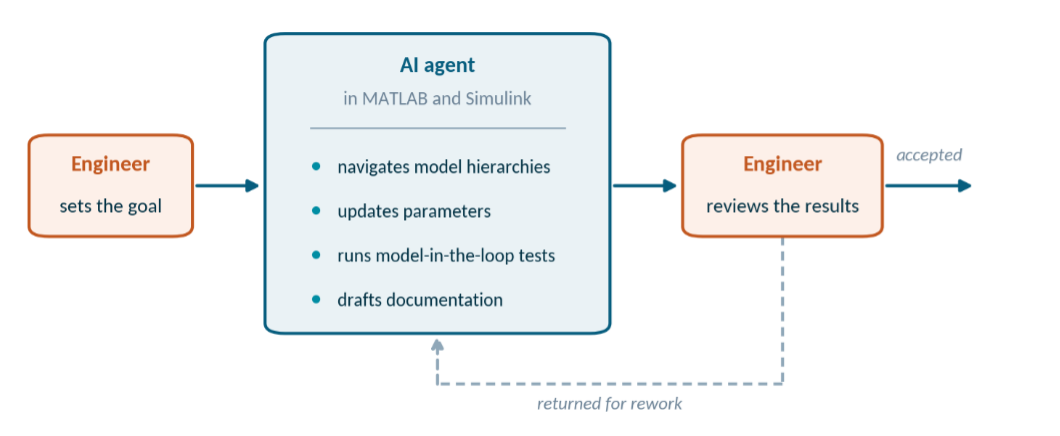
Figure 2—Lucid’s Agentic Workflow, with Human Checkpoints at Validation Decisions
Beyond named examples, the adoption patterns CIMdata observes are consistent. Large aerospace and defense organizations are building internal AI assistants, often in restricted or air-gapped environments; IP-sensitive automotive organizations are prioritizing private-cloud deployment; smaller teams and startups are among the fastest adopters of desktop agents. Value appears where AI is connected to real engineering artifacts under real governance.
Conclusions
CIMdata’s research and MathWorks’ strategy converge from different directions. Industrial organizations rank integration with existing systems as their most important AI selection criterion, and MathWorks has built its approach around it: open protocols for customer-selected agents, connections to the requirements and lifecycle tools organizations already run, and the option to run against their own model host. The research also exposes a gap around trust and governance, where customers are deeply concerned about validating AI output while few AI solution providers treat governance as a development priority. MathWorks’ focus on assurance and traceability speaks directly to it.
Agentic AI in engineering is nonetheless early: validation confidence is low and quantified evidence of value remains scarce. Organizations should approach these workflows the way Lucid’s example suggests, with bounded use cases, human checkpoints at consequential decisions, and evidence expectations defined before adoption rather than after. Data readiness deserves equal attention, since no workflow compensates for poor data. MathWorks is most relevant to organizations developing complex, software-intensive systems that already work with MATLAB, Simulink, and Model-Based Design, particularly in regulated and safety-critical industries. CIMdata recommends that those organizations, and any others adopting AI faster than they can validate its output, include MathWorks when evaluating initiatives to bring generative or agentic AI into engineering workflows.
CIMdata believes that the next phase of engineering transformation will not be driven by AI alone, but by the convergence of AI, simulation, engineering knowledge, and digital engineering practices. Organizations that successfully combine these elements will be better positioned to improve productivity, accelerate innovation, and manage increasing product complexity. MathWorks’ AI strategy reflects many of these emerging industry requirements and provides a useful example of how AI can be integrated into engineering workflows while preserving the evidence, traceability, verification, and human review required for industrial product development.
To learn more about MathWorks’ generative and agentic AI offerings, visit www.mathworks.com/solutions/artificial-intelligence.html.