PDF
PDF
NX Inspector links PMI to characteristics, closing the design to production to quality evaluation loop
Takeaways
- Characteristics are critical data elements for model-based enterprise (MBE) maturity, closed-loop digital threads, and are required to meet Department of Defense Instruction 5000.97.
- A single PMI object often creates multiple design, quality, and manufacturing requirements (i.e., characteristics) that need to be managed and effectively consumed to create high-quality products cost-effectively by assessing part and product performance.
- NX Inspector associatively creates and updates characteristics derived from Designcenter NX PMI objects within Teamcenter where they are managed for and consumed by downstream applications such as quality planning and process planning.
- Planning solutions enable simulation of quality activities using characteristics so parts, assemblies, and designs can be optimized for production and to create effective quality and inspection plans. Feedback incorporated into designs automatically updates downstream quality and inspection plans via NX Inspector’s connectivity.
- NX CAM, NX CMM, Siemens Opcenter, and other execution solutions consume plans based on characteristics and manage execution, capturing physical results so the digital thread is traceable from design through production, which is especially important in high-value A&D products.
Introduction
The Aerospace and Defense (A&D) industry is currently navigating a critical evolution from drawing-centric workflows to a comprehensive Model-Based Enterprise (MBE). This transition is driven not only by the pursuit of operational efficiency but by strict regulatory mandates, such as Department of Defense (DoD) Instruction 5000.97, which necessitates the use of digital engineering and integrated models across the product lifecycle.[1] Although numerous organizations have implemented Model-Based Definition (MBD) by integrating Product Manufacturing Information (PMI) into 3D models, many encounter a “maturity plateau” wherein semantic PMI does not fully satisfy the DoD requirement and additional work is required to decompose PMI into digitally consumable definitions and requirements (characteristics) necessitating continued reliance on 2D drawings.
A primary barrier to achieving total MBE is the persistent disconnection between engineering definition and downstream quality evaluation. In traditional legacy workflows, quality engineers frequently rely on manual processes to interpret design data, often printing 2D representations to physically balloon or tag inspection points. This manual intervention breaks the digital thread, creating static data that cannot automatically update when engineering changes occur, leading to transcription errors and traceability gaps.
Furthermore, raw PMI data is often insufficient for direct consumption by quality and manufacturing systems due to the one-to-many complexity of inspection requirements. A single semantic PMI object in a CAD model—such as a hole callout with a counterbore—represents a geometric definition, but it may generate multiple unique characteristics that must be verified, including diameters, depths, and positional tolerances for every instance in a pattern of holes. To bridge the gap between design and production, industry requires a mechanism to parse these semantic definitions into discrete, manageable, and traceable characteristics that flow seamlessly from the design authority to the shop floor.
From Semantic PMI to Managed Characteristics
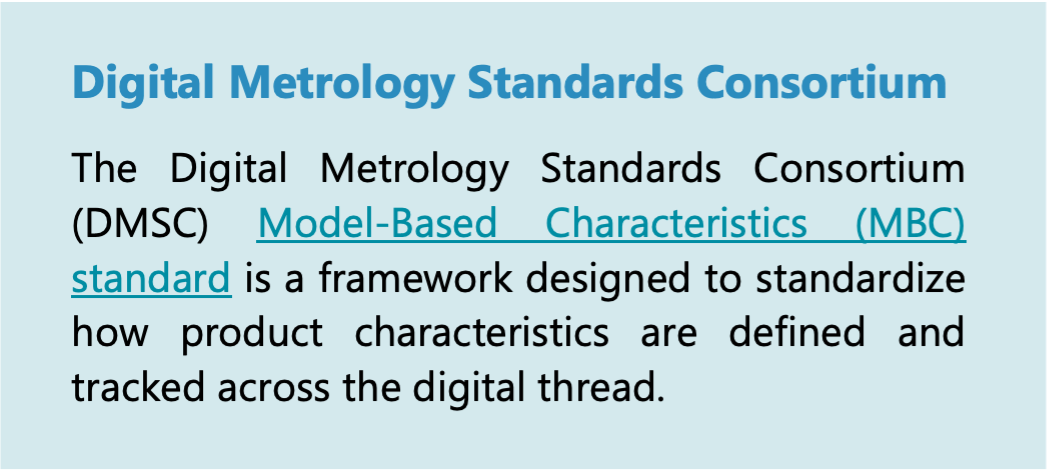 In a modern digital thread, characteristics serve as the foundational data elements that bridge the gap between engineering design and downstream manufacturing and quality processes. While semantic PMI provides the geometric context, characteristics are the discrete, measurable requirements such as individual diameters, depths, or position tolerances that define the actual criteria for inspection. The distinction between PMI and characteristics is critical: a single PMI object, such as a hole pattern with a counterbore, may generate dozens of individual characteristics that must be tracked, measured, and validated.
Siemens NX Inspector facilitates this connection by treating Characteristics as first-class, associative data objects rather than static annotations. By leveraging the semantic PMI within the native CAD environment, NX Inspector provides several key advantages:
- Automatic requirement generation: It parses complex PMI to automatically generate discrete characteristics, ensuring no requirement is overlooked.
- Automated ballooning: The direct connection to PMI allows automatic ballooning of characteristics on drawings and 3D models, significantly reducing manual effort and errors.
- Persistent traceability: Each characteristic is assigned a persistent unique identifier (UUID) that aligns with the DMSC MBC standard, ensuring consistent nomenclature for industry-wide interoperability.
- Associative updates: Because the characteristics are associative to the native CAD data, they automatically update when engineering changes occur, preserving the integrity of the digital thread throughout the product lifecycle.
By leading with the definition and management of characteristics, manufacturers can ensure that engineering intent is seamlessly and accurately communicated to every downstream stakeholder.
The Bill of Characteristics and Teamcenter Integration
Once characteristics are defined in the authoring tool, they must be managed to support the product lifecycle. NX Inspector publishes this data to Teamcenter, creating a managed Bill of Characteristics (BoC) associated with the part revision and 3D model. This integration elevates characteristics to first-class objects within the Product Lifecycle Management (PLM) environment, enabling revision control, history tracking, and where-used analysis.
This approach resolves a longstanding traceability gap. In traditional processes, if a design tolerance changes, the quality plan often requires manual updates, slowing processes and introducing high risks of transcription errors. With NX Inspector and Teamcenter integration, a change in the NX model propagates to the BoC. Because the system relies on persistent UUIDs, the quality plan recognizes that a specific characteristic has been modified—even if its value changes—maintaining the digital link between the engineering definition and the inspection requirement. This allows quality engineers to assess the impact of and respond to engineering changes immediately without recreating inspection plans from scratch.
Closing the Loop: Planning and Execution
The value of the digital thread is realized when data flows into execution. Characteristics enrich the digital thread and enable better insights and improved automation. Teamcenter Quality consumes the managed characteristics to generate detailed inspection plans. Because the characteristics are derived directly from the authoritative MBD, the inspection plan is inherently aligned with the design intent. Furthermore, change impact analyses can identify to the feature level making both decisions and automation easier, Figure 1 shows NX Inspector identify characteristic criticality within the closed-loop flow that the Siemens suite can achieve.
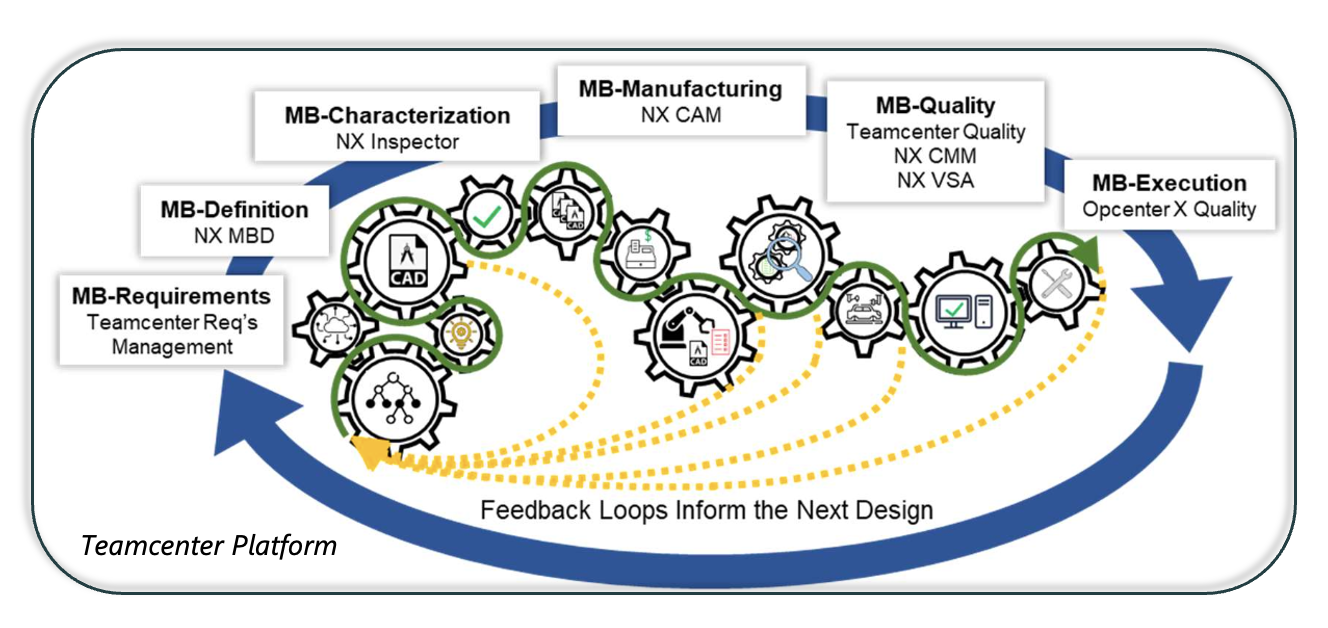
Figure 1: Closed-Loop Digital Thread Enabled by NX Inspector
(Courtesy of Belcan and Siemens)
This connectivity enables a closed-loop quality process. Physical measurement data can be traced back through the digital thread to the specific design features and characteristics that defined it. This capability was highlighted in a recent independent assessment by Belcan,[2] which evaluated the Siemens software suite against the NSE MBE Maturity Index. The assessment found that the Siemens ecosystem, enabled by NX Inspector, scored an average of 5.5 on a 6.0 scale, with strong capabilities in establishing trusted MBD and ensuring digital continuity across the enterprise. By closing the loop between physical inspection and digital definition, organizations can move beyond compliance and towards data-driven continuous improvement and advanced levels of maturity and automation.
Conclusion
As A&D manufacturers and those producing high-value, complex components or products face increasing pressure to modernize, it is no longer optional to deploy a fully functional digital thread supporting an MBE strategy. Siemens NX Inspector transforms manual, drawing-centric workflows into a connected digital thread by providing an automated solution to transform static PMI into actionable, traceable characteristics. By automating the creation of characteristics, treating them as first-class traceable objects, and ensuring their persistence through the quality lifecycle, Siemens offers a pathway for organizations to improve their digital maturity and achieve the trusted, connected digital thread required for a true Model-Based Enterprise.
CIMdata recommends that organizations currently evaluating their MBD and MBE strategies consider how their toolsets handle the transition from design intent through inspection execution to at scale production. The Siemens Xcelerator portfolio, with its focus on standards-based characterization and closed-loop quality, presents a compelling architecture for companies seeking to optimize cost, quality, and time to market.
To learn more about NX Inspector please visit the website.